

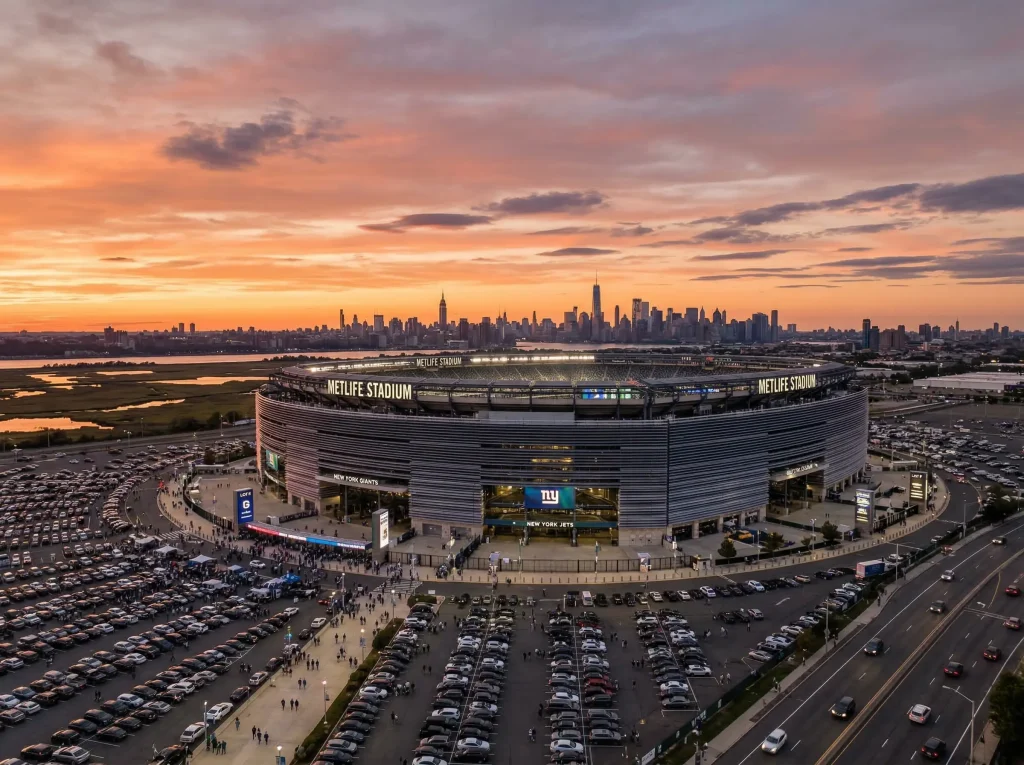
MetLife Stadium: Everything About the 2026 World Cup Final Venue
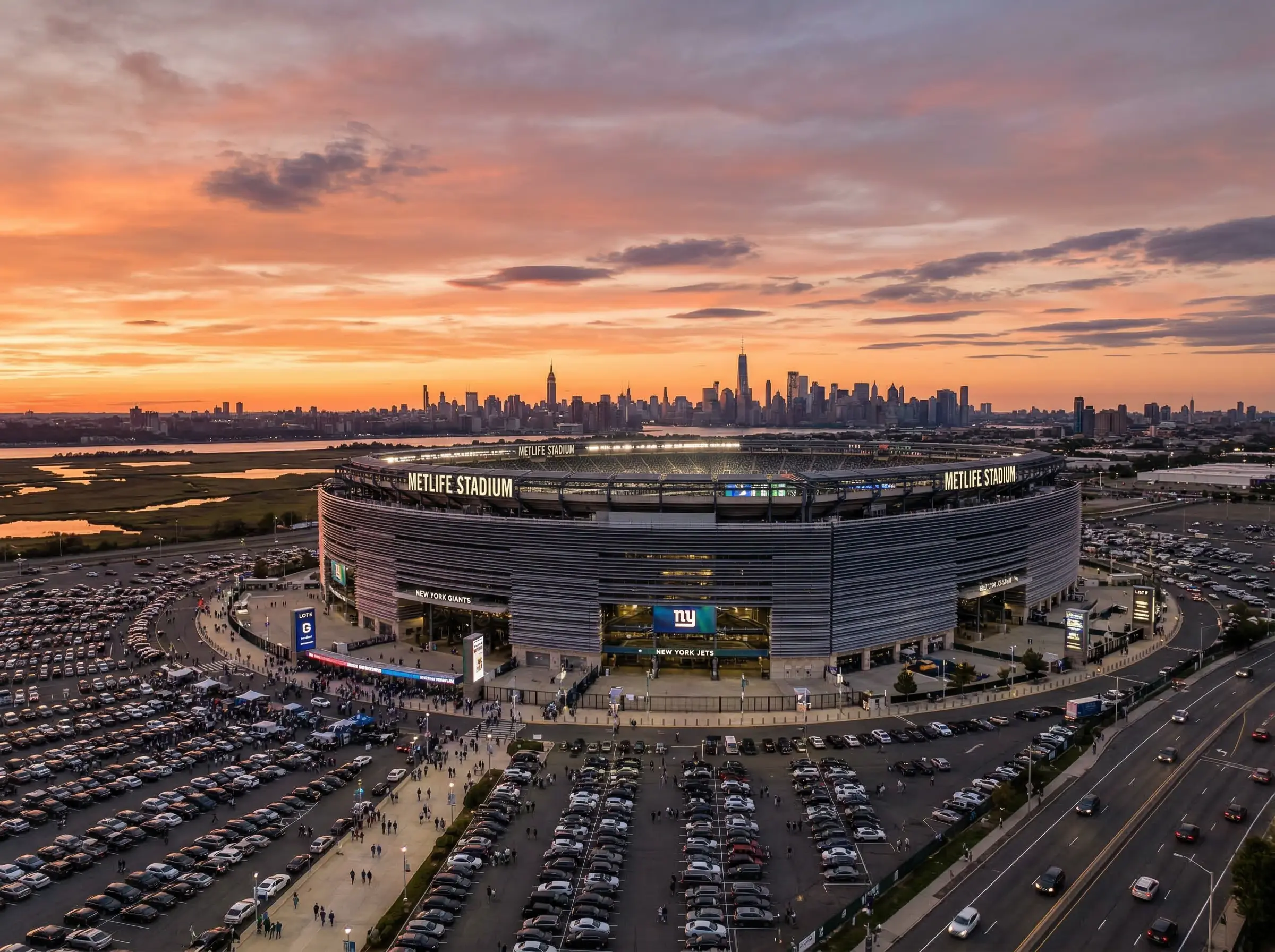
On most Sundays from September through January, MetLife Stadium hosts 82,500 fans watching the New York Giants or the New York Jets crash into each other across 100 yards of synthetic turf. On July 19, 2026, that same concrete bowl in the New Jersey Meadowlands will crown a football world champion — a different kind of football, played on temporary natural grass, in front of a global audience measured in billions. The transformation of an NFL stadium into the stage for the World Cup’s most important match is one of the most fascinating engineering and logistical stories of the 2026 tournament, and the venue’s characteristics will directly influence how the final plays out.
From Football Temple to the World’s Stage
MetLife Stadium opened in 2010 at a cost of $1.6 billion, replacing the old Giants Stadium that had occupied the same site in the Meadowlands Sports Complex since 1976. The design prioritized the NFL experience: steep, close-to-the-field seating that maximizes noise, wide concourses that handle the flow of 80,000-plus spectators, and a deliberately open-air structure that subjects both teams and fans to the New Jersey elements. There is no roof — retractable or otherwise — and no climate control. What you get on July 19 is whatever the atmosphere decides to deliver.
The decision to host the World Cup final in an open-air, roofless stadium in the northeastern United States in mid-July is a deliberate choice by FIFA that prioritizes atmosphere and tradition over controlled conditions. The Lusail Stadium final in Qatar 2022 was played under a closed roof with air conditioning, producing an artificial environment that some felt detracted from the spectacle. MetLife offers the opposite: real weather, real air, real stakes. The tradeoff is unpredictability — a thunderstorm, a heat wave, or a humid blanket of air that saps energy from players who have been competing for 39 days across a continent-sized tournament.
The stadium’s location in East Rutherford, New Jersey — roughly 12 kilometers from Midtown Manhattan — places it within the orbit of the New York metropolitan area, the largest media market in the United States and home to significant diaspora communities from virtually every footballing nation. Whatever two teams reach the final, both will find substantial support in the stands. That demographic diversity makes MetLife one of the few World Cup final venues where neither finalist is likely to face a hostile or indifferent crowd — a subtle but real factor in matches decided by margins as thin as a penalty shootout.
Which World Cup Matches MetLife Stadium Will Host
MetLife is not reserved exclusively for the final. The stadium will host matches throughout the tournament, including group stage fixtures and at least one knockout round game, building a competitive history within the venue before the decisive match. The specific group stage assignments place high-profile teams in the stadium during the first two weeks, ensuring that the venue’s atmosphere and logistics are tested under genuine pressure before the final. I tracked the ticketing allocations for MetLife and the demand curves suggest a capacity expansion to approximately 85,000 for the final through temporary seating additions — a number that would make it one of the largest World Cup final audiences in history, trailing only the 1950 final at the Maracanã in Rio de Janeiro.
For the group stage and early knockout rounds, MetLife’s scheduling tends to favor Eastern Time prime-time slots — 1:00 PM, 4:00 PM, and 7:00 PM ET — which translate to 7:00 PM, 10:00 PM, and 1:00 AM CEST for Austrian viewers. The final itself is expected to kick off at 3:00 PM ET (9:00 PM CEST), a slot chosen to balance American afternoon viewing with European evening prime time. That 9:00 PM CEST kickoff is the most comfortable time Austrian fans could hope for, and it aligns with the traditional European expectation that a World Cup final is an evening event to be shared with friends, family, and possibly a wager or two.
Climate, Surface, and the Open Roof: What Will Shape the Final
July in northern New Jersey is not gentle. Average high temperatures sit around 30°C, average humidity hovers near 65%, and afternoon thunderstorms roll through the Meadowlands with enough regularity that the stadium’s drainage system was designed to handle significant rainfall during NFL preseason. A 3:00 PM kickoff means the final will be played during the warmest part of the day, with the sun still high and shade limited to the western stands. Players on the pitch will be fully exposed to direct sunlight for most of the first half, and the combination of heat, humidity, and 39 days of accumulated tournament fatigue will test the physical limits of every player on the field.
The playing surface is perhaps the most scrutinized element of the MetLife preparation. FIFA requires natural grass for all matches, and MetLife’s standard NFL surface is synthetic FieldTurf. The conversion process involves installing modular grass trays — essentially pre-grown grass on a portable substrate — over the synthetic surface, creating a natural playing field that can be maintained throughout the tournament and removed afterward. The technology has advanced significantly since its early iterations, but converted surfaces still play differently from grass grown in traditional soil. The ball rolls faster, the bounce is slightly less predictable, and the footing is firmer than what European players experience on Premier League or Bundesliga pitches. In a final where fine margins decide everything, that surface difference is not trivial.
Wind is the hidden variable at MetLife. The Meadowlands sits in a flat, exposed area between the Hackensack River and the New Jersey Turnpike, with no surrounding topography to break wind patterns. During NFL games, wind has been a measurable factor in kicking accuracy and ball flight, and football’s lighter ball is even more susceptible to wind interference. Long-range shots, crosses into the box, and goalkeeper distribution from goal kicks can all be affected by gusting crosswinds that swirl inside the open bowl. Teams that prepare by training in windy conditions — or coaches who adjust their tactical approach to minimize long-ball dependence — will hold an edge that the opposing team may not have anticipated.
Final Betting: What the Venue Means for the Odds
Every World Cup final has a venue story that bettors should factor into their analysis. In 2014, the Maracanã’s emotional charge helped Argentina find energy against Germany before Götze’s late winner. In 2018, Luzhniki’s hybrid surface and Moscow’s mild climate produced a technical, open final. In 2022, Lusail’s air conditioning created conditions so controlled that the match resembled a training ground exercise in its precision. MetLife in 2026 introduces variables — heat, humidity, wind, surface quality — that should push the final toward a more physical, attritional contest.
The under 2.5 goals market in the final deserves serious consideration. Of the last eight World Cup finals, five produced two goals or fewer in regular time. Add MetLife’s conditions — players depleted by a month-long tournament, a surface that is functional but not ideal, and weather that saps the energy required for fluid attacking football — and the probability of a low-scoring final increases. The historical base rate of under 2.5 goals in World Cup finals is approximately 65%, and I would push that figure higher for a match played in MetLife’s specific conditions.
Extra time and penalties are another market where MetLife’s characteristics matter. The physical toll of playing 90 minutes in July heat at an open-air stadium will be greater than in air-conditioned Qatar or mild Russian summer conditions. Players who enter extra time will be operating at reduced capacity, which historically increases the rate of defensive errors and deflected goals — the kind of chaotic, low-quality goals that make correct score betting treacherous but „both teams to score“ betting more viable. I will be watching the semifinal performances closely to identify which finalists have the deeper squads and fresher substitutes, because those 30 extra minutes at MetLife will punish thin rosters brutally.
For anyone considering outright winner bets, the full venue breakdown across all 16 stadiums provides the context needed to track how teams adapt to American playing conditions throughout the tournament. A team that thrives at MetLife in the group stage has already proven it can handle the surface, the climate, and the atmosphere — data that becomes invaluable when pricing the final.
