

2026 World Cup Stadiums: 16 Venues in Three Countries — What Insiders Know
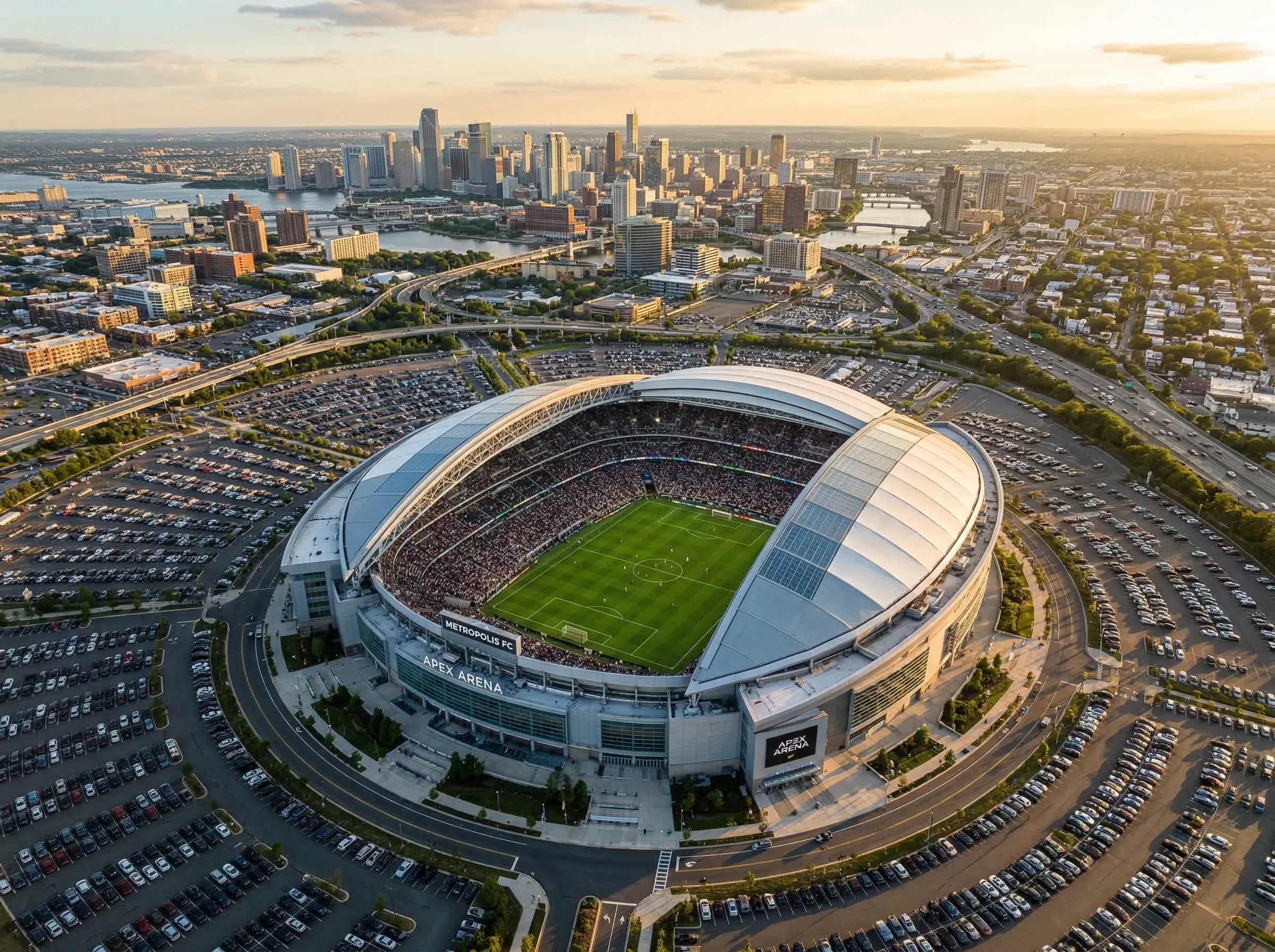
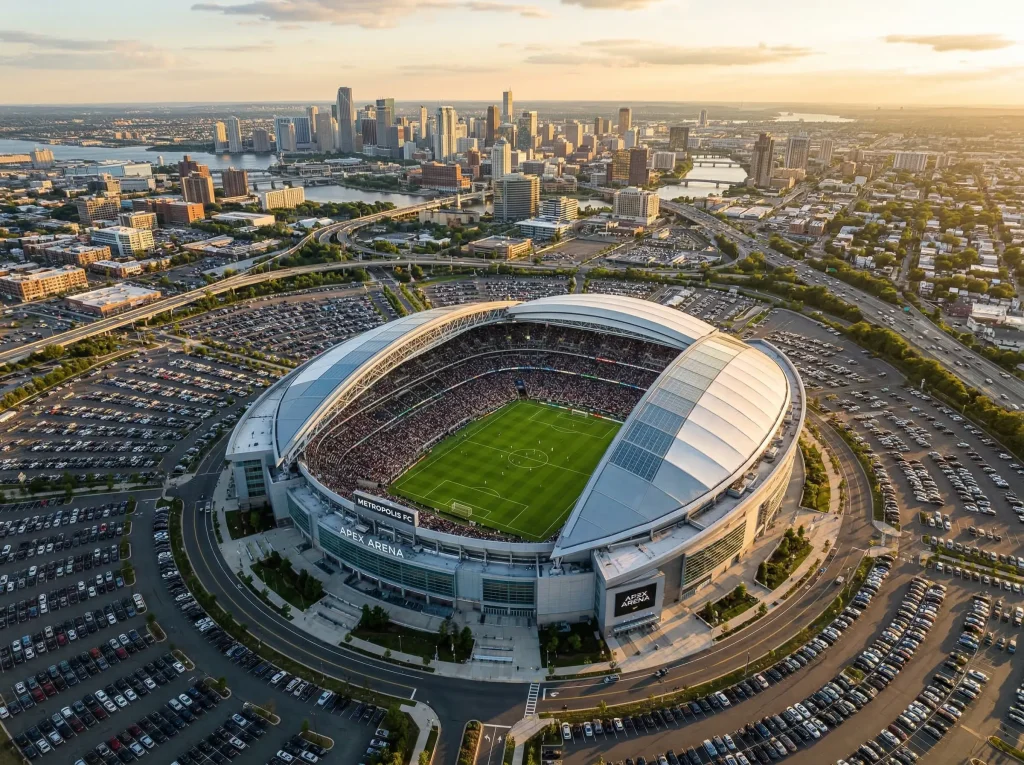
Not a single one of the 16 stadiums hosting the 2026 World Cup was built for football. Every venue is either an American football stadium, a multi-purpose arena, or a repurposed legacy ground — and that fact alone tells you more about this tournament’s character than any FIFA press release. I have visited seven of these 16 venues for various events over the years, and what strikes me every time is the sheer scale: these are cathedrals of American sport being asked to speak a different language for 39 days. How well they translate will shape the tournament.
Three Countries, 16 Stadiums: The Most Ambitious World Cup Infrastructure Ever
When FIFA awarded the 2026 World Cup to the United States, Mexico, and Canada in 2018, the bid promised something unprecedented: a tournament spanning an entire continent, from Vancouver’s Pacific coastline to Mexico City’s highland plateau, from Miami’s tropical humidity to Seattle’s maritime climate. The 16 selected venues — 11 in the US, 3 in Mexico, and 2 in Canada — represent the widest geographic spread in World Cup history. The distance from BC Place in Vancouver to Estadio Azteca in Mexico City is roughly 3,800 kilometers, equivalent to traveling from Lisbon to Moscow.
That geographic ambition creates logistical realities that will affect every team differently. Groups are clustered by region to minimize travel — Group J, for example, plays in Santa Clara (California) and Arlington/Kansas City (Texas/Missouri), keeping transit manageable. But teams that advance deep into the knockout rounds may find themselves zigzagging across the continent, and the cumulative fatigue from flights, time zone changes, and climate variation will be a factor that no previous World Cup has tested at this scale. For bettors, understanding which teams face the most demanding travel schedules is not trivial — it is a genuine edge.
The American Stadiums: Football Arenas Converted for the Beautiful Game
I remember walking into SoFi Stadium in Inglewood for a concert and thinking: this is not a building, this is a statement. The $5.5 billion venue that serves as home to the Los Angeles Rams and Chargers is the most expensive stadium ever built, and its scale — over 70,000 capacity with a translucent roof — dwarfs anything in European football. That architectural excess is typical of the American venues, and converting these NFL stadiums for World Cup use involves more than painting new lines on the field.
MetLife Stadium in East Rutherford, New Jersey, hosts the final on July 19. With a capacity exceeding 82,000, it is the largest venue in the tournament and one of the few open-air stadiums in the selection. The home of the New York Giants and Jets, MetLife sits in the Meadowlands — a flat, wind-exposed area where July temperatures average 30°C with significant humidity. The playing surface will be natural grass installed specifically for the tournament, replacing the synthetic turf used for the NFL season. That grass transition is a recurring theme across all American venues: FIFA mandates natural grass for World Cup matches, but the temporary installation process can produce surfaces that play differently from the manicured pitches European teams are accustomed to.
AT&T Stadium in Arlington, Texas — where Austria face Argentina on June 22 — is a retractable-roof venue with air conditioning, meaning climate is controlled regardless of the brutal Texas summer. Its 80,000-plus capacity and the massive video board spanning the field create an atmosphere unlike any European ground. Hard Rock Stadium in Miami Gardens, an open-air venue hosting matches in South Florida’s summer heat, will test teams‘ physical conditioning more than almost any other location. NRG Stadium in Houston offers a closed roof and artificial cooling, while Mercedes-Benz Stadium in Atlanta provides a similar climate-controlled environment beneath its signature retractable oculus roof.
On the West Coast, Levi’s Stadium in Santa Clara — Austria’s venue for the Jordan opener — is a modern open-air ground that bakes in Silicon Valley’s dry summer heat during afternoon matches but cools rapidly for evening kickoffs. Lumen Field in Seattle offers the most European-style experience: a compact, loud, open-air stadium where the Pacific Northwest climate should produce comfortable playing conditions. Lincoln Financial Field in Philadelphia and Gillette Stadium in Foxborough (greater Boston) round out the East Coast venues, both open-air stadiums where summer weather ranges from pleasant to sweltering depending on the week. GEHA Field at Arrowhead Stadium in Kansas City — Austria’s venue for the Algeria match — is legendary for its atmosphere in the NFL, with a cauldron-like design that amplifies crowd noise, and Kansas City’s June climate brings heat, humidity, and the possibility of dramatic thunderstorms that can halt play without warning.
A critical detail for bettors across all eleven US venues: the majority were designed with sight lines optimized for American football, where the action moves along a single axis. Football played on the same field distributes movement across a wider area, and the corners of converted NFL stadiums sometimes create awkward viewing angles that reduce crowd engagement in those sections. The atmosphere differential between a purpose-built football stadium and a converted NFL arena is real, and teams that feed off crowd energy — South American sides especially — may find the acoustic environment slightly muted compared to what they experience in La Bombonera or the Maracanã.
Mexico: Azteca and the Legacy of Two World Cups
The last time I watched a match at Estadio Azteca, the altitude hit me before the atmosphere did. At 2,200 meters above sea level, Mexico City’s air contains roughly 20% less oxygen than sea-level venues, and the effect on players who are not acclimatized is measurable: running distances drop, recovery between sprints lengthens, and the ball behaves differently in thinner air — flying faster and dipping less on long passes. Azteca is the only stadium in the world that has hosted two World Cup finals (1970 and 1986), and its selection as the opening match venue for 2026 adds a third chapter to its unmatched tournament history.
Estadio BBVA in Monterrey — a purpose-built football ground that opened in 2015 — is the most modern Mexican venue and the closest in design philosophy to European football stadiums. Its 53,500 capacity is smaller than the American venues but the atmosphere is intimate and intense. Monterrey’s climate in June is brutally hot, with temperatures regularly exceeding 35°C, and the city’s lower altitude compared to Mexico City means humidity is higher. Estadio Akron in Guadalajara, home to Chivas, sits at roughly 1,500 meters altitude and offers a compromise between Mexico City’s extreme elevation and the sea-level venues in the US. All three Mexican stadiums use natural grass as standard, eliminating the surface conversion issues that affect the American venues.
Canada: Toronto and Vancouver as World Cup Newcomers
Canada hosting World Cup matches for the first time is a milestone that deserves more attention than it receives. BMO Field in Toronto — a 30,000-capacity venue that will be expanded for the tournament — is the smallest stadium in the World Cup roster, but what it lacks in size it compensates for in atmosphere. As the home ground of Toronto FC in Major League Soccer, BMO Field is a dedicated football venue that does not require the conversion gymnastics of NFL stadiums. Toronto’s June weather is typically warm and humid, with average highs around 25°C — comfortable conditions for players from any continent.
BC Place in Vancouver operates under a retractable roof that provides weather protection against the Pacific Northwest’s unpredictable summers. With a capacity of approximately 54,000, it offers a controlled environment where the playing surface — converted from synthetic to natural grass for the World Cup — will be the primary adaptation challenge. Vancouver’s mild climate and proximity to the Pacific Ocean make it one of the most physically forgiving venues in the tournament, a factor that could benefit European teams drawn to West Coast groups who need every physiological advantage they can get to offset the jet lag.
Where Austria Play: Levi’s Stadium and AT&T Stadium in Profile
Austrian fans planning their viewing schedules — or their travel — need to understand the specific conditions at the two confirmed venues where the national team will play group matches, plus Arrowhead Stadium for the Algeria encounter.
Levi’s Stadium opened in 2014 at a cost of $1.3 billion and was designed primarily for the San Francisco 49ers‘ NFL season, which runs from September through January. Summer use was an afterthought in the original design, and the stadium’s open-air configuration with limited shade means that afternoon matches expose players and spectators to direct California sun. Austria’s evening kickoff on June 17 avoids the worst of this — evening temperatures in Santa Clara typically drop to 18-22°C, which is pleasant for European players. The pitch will be temporary natural grass over the stadium’s standard surface, and the venue’s sight lines are excellent from almost every seat, creating an intimate atmosphere despite the 68,500 capacity.
AT&T Stadium is a fundamentally different experience. The retractable roof will almost certainly be closed for the Argentina-Austria match on June 22, sealing the 80,000-plus crowd inside an air-conditioned environment where the temperature is controlled at approximately 21°C regardless of the 35°C+ heat outside. The playing surface is also temporary natural grass, but AT&T Stadium’s indoor conditions produce a faster, more predictable surface than outdoor venues. The noise inside a closed-roof stadium during a World Cup match between Argentina and Austria — with significant diaspora communities in Texas supporting both sides — will be intense.
Climate, Turf, and Logistics: What Actually Affects the Match
Every World Cup has a venue story that casual fans overlook and insiders obsess over. In Qatar, it was the air-conditioned stadiums and their effect on playing rhythm. In Brazil, it was the altitude in Belo Horizonte and the humidity in Manaus. In 2026, the venue stories will be multiple and varied, because no previous tournament has asked teams to compete across such a wide range of environmental conditions.
The turf situation deserves particular attention. FIFA requires natural grass for all World Cup matches, but 14 of the 16 venues normally use synthetic surfaces for their primary tenants. The solution — temporary natural grass systems installed weeks before the tournament — has improved dramatically since the early attempts at the 2015 Women’s World Cup in Canada drew widespread criticism, but the quality remains variable. Grass installed over existing synthetic surfaces behaves differently from grass grown in traditional soil: the root structure is shallower, the drainage characteristics differ, and the divots heal more slowly during a match. Teams that train on natural grass at their base camps and then play on converted surfaces will notice the difference, particularly in their passing and first touch.
Climate variation between venues is the other major factor. A team playing their first match at Estadio Azteca at 2,200 meters altitude and their second match at Hard Rock Stadium in Miami at sea level faces an oxygen adjustment that takes approximately 48 to 72 hours. Players acclimatized to altitude experience a temporary performance boost at sea level — their bodies have adapted to extracting more oxygen from thinner air, and suddenly operating in oxygen-rich conditions gives them an endurance edge that lasts several days. Smart coaches — and smart bettors — will track which teams move from high-altitude to low-altitude venues between matches, because that transition creates a measurable physical advantage that the broader WM 2026 betting landscape has not yet fully priced in.
