

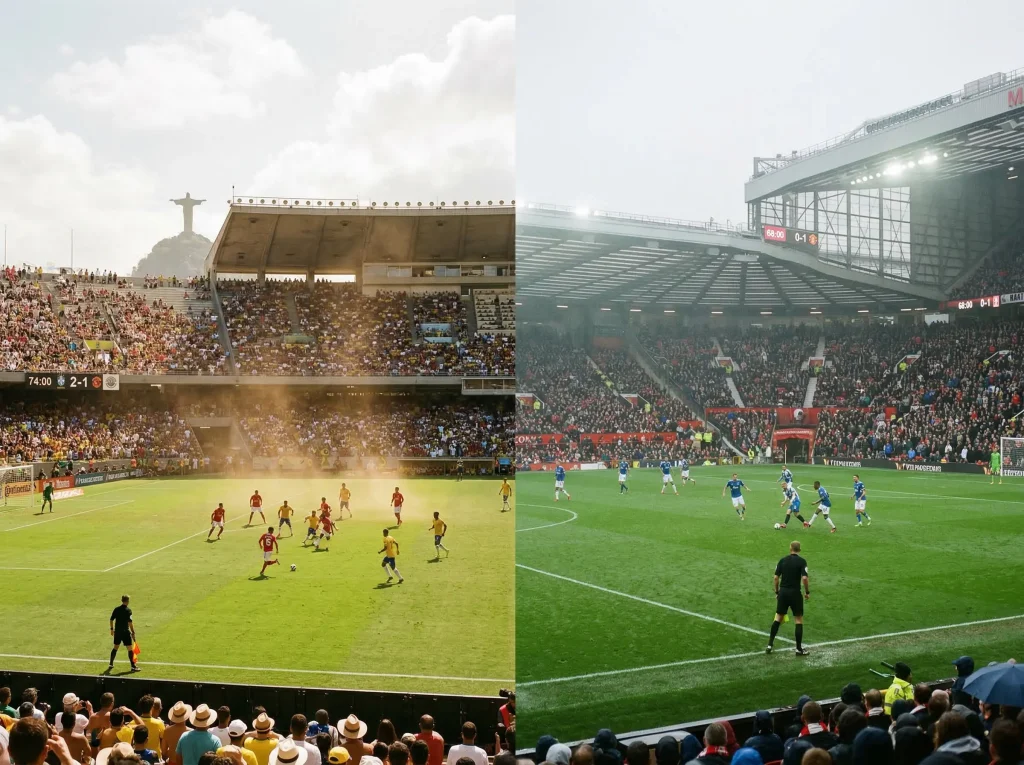
Climate and Conditions at the World Cup Venues: What It Means for Betting
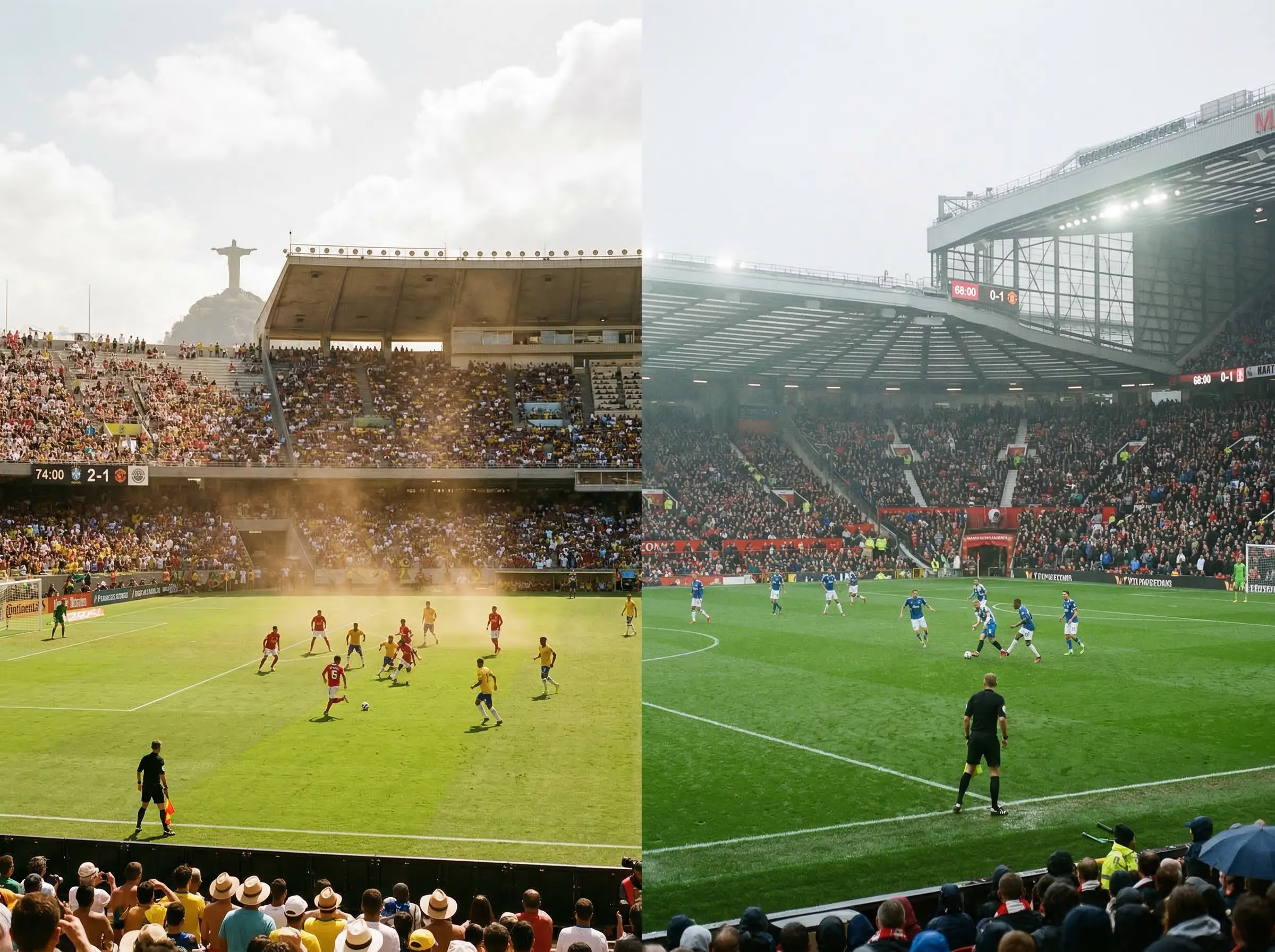
Nobody talks about climate before a World Cup. Everyone talks about it during one. At the 2022 tournament in Qatar, the entire scheduling calendar was rebuilt around heat. At the 2014 World Cup in Brazil, a FIFA-mandated cooling break was introduced mid-half for the first time in tournament history after players in Manaus were visibly struggling in 32°C humidity. The 2026 World Cup will not have a single climate story — it will have a dozen, because 16 stadiums across three countries produce environmental conditions ranging from desert heat to maritime fog, from high-altitude oxygen depletion to controlled indoor environments where the temperature never changes. For a bettor willing to do the work, climate is not background noise — it is signal.
From Desert Heat to Coastal Fog: The Climate Zones of the 2026 World Cup
I mapped every venue against its June-July historical weather data, and the variation is staggering. Houston, Dallas, and Miami sit in a subtropical band where June temperatures routinely exceed 33°C with humidity above 70% — conditions that the US military classifies as high risk for heat-related illness during sustained physical activity. Seattle and Vancouver occupy the opposite end of the spectrum: Pacific Northwest summers produce average highs of 21-24°C with moderate humidity, the kind of conditions that European teams train in for most of their domestic seasons. Between those extremes, every other venue occupies a distinct microclimate that creates specific performance effects.
The northeastern venues — MetLife (New Jersey), Lincoln Financial Field (Philadelphia), Gillette Stadium (Boston) — experience warm but variable summer weather, with average highs around 28-30°C and the ever-present possibility of Atlantic weather systems delivering sudden temperature drops or thunderstorms. The inland venues — AT&T Stadium (Dallas), NRG Stadium (Houston), GEHA Field (Kansas City), Mercedes-Benz Stadium (Atlanta) — face the full force of continental summer heat, though several of these stadiums have retractable roofs and air conditioning that neutralize the external climate entirely. The California venues — Levi’s Stadium (Santa Clara) and SoFi Stadium (Los Angeles) — combine dry heat with minimal humidity, creating conditions that feel less oppressive than the southeastern US despite similar temperatures.
Mexico introduces altitude as a variable that exists at no US or Canadian venue. Estadio Azteca in Mexico City sits at 2,200 meters, where the combination of reduced oxygen and moderate temperatures (averaging 23°C in June, significantly cooler than the southern US) creates a unique physiological challenge. Guadalajara at 1,500 meters and Monterrey at 530 meters add further gradation, and teams that play multiple matches across Mexican venues face altitude adjustments between fixtures that compound the baseline effects of international travel.
Heat as a Match Decider: Houston, Dallas, Miami
I covered a Copa América match in Houston several years ago, and watching players from a European-based team visibly slow in the second half — their pressing intensity dropping, their sprint distances shortening, their decision-making deteriorating — convinced me that heat is the most underrated variable in international football. The data backs this up: a 2019 study of over 5,000 professional football matches found that for every 1°C increase above 22°C, total distance covered per team dropped by approximately 30 meters, and the number of high-intensity sprints declined by 1.5%. At 34°C — a routine afternoon temperature in Houston, Dallas, or Miami in June — those cumulative effects translate to roughly a 5% reduction in team-wide work rate compared to matches played at 20°C.
The three venues that concern me most are Hard Rock Stadium in Miami (open-air, no shade, subtropical humidity that can exceed 80%), NRG Stadium in Houston (closed roof with air conditioning, but pre-match warm-ups and the psychological effect of arriving in 35°C heat still affect players), and GEHA Field in Kansas City (open-air with no shade, and Kansas City’s June climate combines 32°C+ heat with the kind of suffocating humidity that the Great Plains produce when warm Gulf air pushes north). For Austrian fans, the Kansas City factor is directly relevant — Austria’s final group match against Algeria on June 27 takes place at Arrowhead Stadium, and if the daytime high reaches 35°C as historical averages suggest, the 10:00 PM local kickoff will offer only partial relief, with field-level temperatures still near 28-30°C.
The betting implication is straightforward: back the under in total goals markets for evening matches at the hottest open-air venues. Heat-fatigued players generate fewer high-quality chances, goalkeepers face fewer shots, and the general tempo of matches played in extreme conditions drops in the second half. The effect is most pronounced when both teams are unacclimatized — two European sides meeting in a knockout match in Miami, for example — and least pronounced when one team has a heat advantage through geographic origin or base camp location. Teams from Africa, Central America, the Middle East, and tropical South America will handle the southern US venues significantly better than teams from Scandinavia, Northern Europe, or the British Isles.
Thin Air in Mexico: The Underestimated Advantage
Altitude is a dimension of football performance that most bettors ignore entirely, and the 2026 World Cup places it center stage for the first time since the 1986 tournament, also held in Mexico. The physiological effects of playing at 2,200 meters are well documented: reduced oxygen saturation in the blood leads to faster lactate accumulation in muscles, which means players fatigue sooner and recover more slowly between efforts. The effect is not subtle — studies of Liga MX matches show that visiting sea-level teams concede an average of 0.3 more goals per match at Azteca compared to neutral-altitude venues, a statistically significant difference driven almost entirely by second-half performance decline.
Beyond the cardiovascular effects, altitude changes the physics of the ball. Reduced air density at 2,200 meters means less aerodynamic drag, producing a ball that travels approximately 5% faster on shots and crosses. The Magnus effect — the spin-induced curve that makes free kicks and swerving crosses possible — is weaker in thin air, so the ball follows a flatter trajectory. Goalkeepers report that shots „arrive faster“ at altitude, and the reduced movement in the air makes it harder to read the ball’s final trajectory. Set pieces — corners, free kicks, long throw-ins — are all affected, and teams whose set-piece routines depend on precise curve and dip may find their practiced deliveries performing differently at Azteca than in training.
For bettors, the altitude factor at Mexican venues creates a specific edge: back teams with altitude experience or those that have spent at least a week acclimatizing in Mexico against opponents arriving directly from sea-level environments. CONCACAF teams (Mexico, Canada, and several Central American qualifiers) have extensive experience at altitude through regional competition, and South American teams — particularly those from Quito (Ecuador, 2,850m), Bogotá (Colombia, 2,640m), or La Paz (Bolivia, 3,640m) — carry a physiological adaptation that European teams simply cannot replicate in a week of pre-tournament training.
Natural Grass, Synthetic Turf, Hybrid Surfaces: What Lies Beneath
The surface under a player’s feet matters more than most analyses acknowledge. At the 2026 World Cup, the turf situation is the most complex in tournament history because FIFA’s mandate for natural grass collides with the reality that the vast majority of host stadiums use synthetic surfaces for their primary sports. The solution — modular natural grass systems installed temporarily over existing synthetic turf — is proven technology, but „proven“ does not mean „identical to traditional grass.“
Modular grass systems consist of pre-grown grass sod on a portable substrate — typically a tray or roll-out system that sits atop the existing synthetic surface. The grass itself is real, but the root structure is shallow (the trays are typically 50-75mm deep), which affects stability in several ways. Players making sharp turns can find less grip than on deep-rooted pitches, particularly when the surface is wet. The ball bounces slightly differently on a tray-based system than on soil-grown grass, producing a faster roll and a lower, more predictable bounce. In heavy rain, drainage through the tray system can be slower than through natural soil, creating surface water that affects passing speed and ball control.
The two Canadian venues — BMO Field in Toronto and BC Place in Vancouver — face the most significant conversion challenges. BMO Field uses a heated pitch system designed for MLS’s early-spring and late-fall schedule, and the interaction between the heating infrastructure and the temporary grass installation adds complexity. BC Place’s retractable roof creates a partially enclosed environment that affects grass health — natural grass needs sunlight, and the roof’s position during the tournament will need to balance weather protection against turf maintenance. Both venues have conducted successful trial installations, but the condition of the surface after three weeks of tournament use remains an unknown variable that could affect later-round matches played at these locations.
What Climate and Surface Mean for Your Bets
After nine years of analyzing international football, I have reached a simple conclusion: the environment is the opponent nobody scouts. Teams spend hundreds of hours studying video of their next opponent, drilling tactical patterns, and rehearsing set pieces. They spend almost no time systematically preparing for the specific climate, altitude, and surface conditions they will encounter at each venue — and that gap between preparation and reality is where informed bettors find value.
My framework for incorporating venue conditions into betting decisions has three layers. First, identify matches where one team has a clear environmental advantage — altitude familiarity, heat tolerance, or surface experience — and assess whether the market has priced that advantage adequately. In most cases, it has not. Second, lean toward the under in total goals markets for matches at the most extreme venues (Azteca, Hard Rock, Arrowhead) unless both teams are acclimatized to the conditions. Third, track how teams perform across their three group matches, noting whether their physical metrics decline as the tournament progresses and the cumulative effect of travel and climate variation compounds. Teams that maintain their pressing intensity and sprint numbers through the third group match are better prepared for the knockout rounds than teams whose metrics drop — and that data, available through publicly reported match statistics, gives every 2026 World Cup venue a role in the broader analytical picture.
